OEM/ODM Kids AI Robots · Samples Available for Qualified B2B Buyers

0%

AI robot technology is moving from research labs into warehouses, hospitals, farms, hotels, and private homes. Global buyers now face a crowded market with very different capabilities, costs, and risks. This guide introduces ten major AI robot types, including autonomous mobile robots, collaborative arms, delivery robots, agricultural machines, inspection platforms, and service robots.

Each category solves a different operational problem. A warehouse robot may move a 20-kilogram container across marked floors, while a healthcare robot may deliver medicine between controlled areas. Small details matter. Battery duration, payload capacity, navigation accuracy, cleaning requirements, and service coverage can change the purchasing decision. So can local connectivity, workplace rules, data protection expectations, and product certification.

Real deployment is rarely perfect. Some robots struggle with reflective floors, crowded corridors, poor lighting, or unexpected objects. Buyers should request practical demonstrations, not rely only on polished videos. Vendor experience, maintenance response, software updates, training, and integration with existing systems deserve equal attention. A low purchase price may hide expensive installation or frequent downtime.

The ranking in this article is designed for informed comparison, not blind purchasing. It considers business value, maturity, adaptability, safety features, and likely global demand. However, market conditions change quickly. A promising system today may need stronger evidence tomorrow. Careful testing remains essential. The best AI robot is not always the most advanced model; it is the one that performs reliably within a buyer’s real environment, budget, and responsibilities.
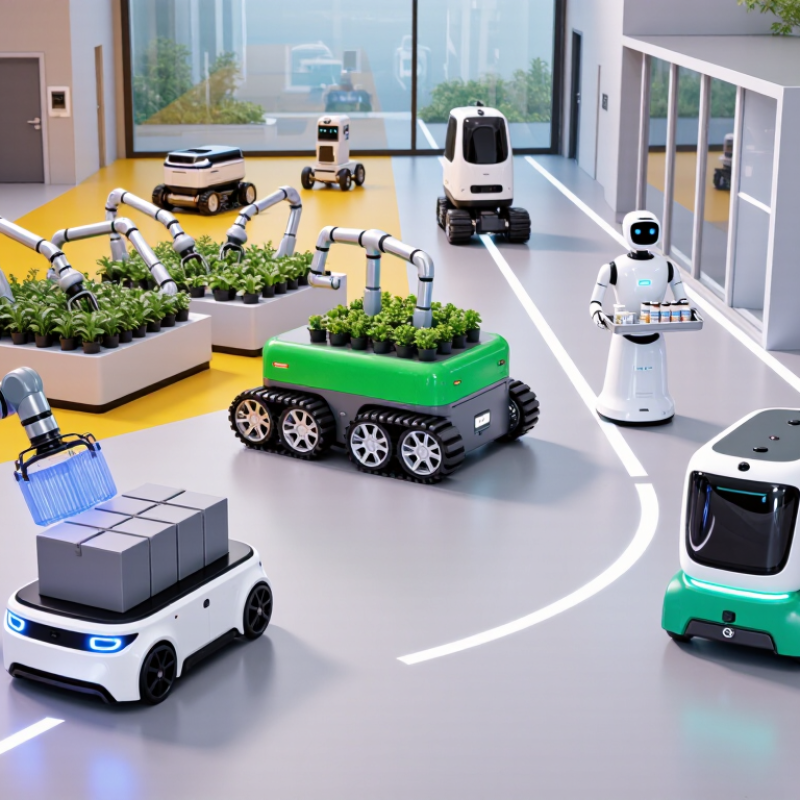
Top 10 AI Robot Types for Global Buyers

AI Robot Categories and Core Intelligent Capabilities

Top 10 AI Robot Types for Global Buyers

AI Robot Categories and Core Intelligent Capabilities

Global buyers can compare AI robots by their working environment and decision-making needs. Industrial robots handle welding, assembly, painting, and high-speed material movement. Collaborative robots support workers near shared production lines. Autonomous mobile robots move components through warehouses using maps, sensors, and obstacle detection. Service robots assist with cleaning, delivery, reception, and facility monitoring. Each category needs different accuracy, payload, mobility, and safety controls.

Healthcare robots may transport supplies, support rehabilitation, or assist with remote communication. Agricultural robots inspect crops, remove weeds, and collect field data under changing weather conditions. Inspection robots use cameras, thermal sensors, or ultrasound to examine equipment and infrastructure. Educational and social robots provide guided interaction, speech recognition, and learning activities. Domestic robots focus on floor care, home monitoring, and routine assistance. These systems rely on perception, navigation, task planning, and human-machine communication.

Capabilities matter more than appearance. A warehouse robot should recognize pallets, adjust routes, and report errors clearly. An inspection robot needs stable image records and traceable maintenance data. Buyers should test performance under dust, poor lighting, network delays, and unexpected obstacles. Not every “intelligent” function works reliably outside demonstrations. Some robots still need frequent human correction. That weakness deserves honest attention. Integration with existing software, staff training, cybersecurity, and local service support can determine practical value. Pilot testing remains useful, even when specifications look impressive.

Industrial AI Robots for Manufacturing and Warehouse Automation

Top 10 AI Robot Types for Global Buyers

Industrial AI robots are changing manufacturing and warehouse automation. The International Federation of Robotics reported 541,302 industrial robot installations worldwide in 2023. The operational stock reached about 4.28 million units. For global buyers, the main options include articulated robots, collaborative robots, SCARA robots, delta robots, Cartesian robots, autonomous mobile robots, autonomous forklifts, robotic picking systems, vision inspection robots, and mobile manipulators.

Each type solves a different physical problem. Articulated robots handle welding and palletizing. Cobots assist workers beside assembly benches. SCARA robots place small parts quickly. Delta robots sort lightweight products at high speed. Cartesian systems support precise movement across fixed rails. AMRs carry bins between storage and production. Autonomous forklifts move pallets through marked aisles. Vision robots inspect surfaces, labels, and dimensions. Picking robots identify irregular items using cameras and gripping tools. Mobile manipulators combine transport with basic handling.

The World Economic Forum’s Future of Jobs Report 2025 found that 58% of employers expect robotics and autonomous systems to transform business by 2030. However, the best choice is not always the most intelligent machine. A warehouse with poor floor data may frustrate an advanced AMR. A fast robot may still create bottlenecks beside a slow packaging line. Buyers should test cycle time, payload, safety functions, integration effort, and recovery after errors. Small failures matter. A dropped carton at 2 a.m. can reveal more than a polished demonstration.

Service AI Robots for Hospitality, Retail, and Public Spaces

Top 10 AI Robot Types for Global Buyers: Service AI Robots for Hospitality, Retail, and Public Spaces

Service AI robots are moving from demonstrations into daily operations. The International Federation of Robotics reported nearly 200,000 professional service robots sold worldwide in 2023, a 30% year-on-year increase. Hospitality, retail, and public spaces now use ten practical types: reception robots, concierge guides, room-service units, food runners, cleaning robots, security patrol robots, inventory scanners, shelf-monitoring robots, telepresence robots, and public-information guides. Each type solves a different bottleneck, from crowded lobbies to missing shelf data.

MarketsandMarkets estimated the global service robotics market at about 19.3 billion US dollars in 2023. Its report projects strong growth through 2028, although forecasts differ by definition and region. Buyers should examine more than speed. A hotel needs quiet navigation, multilingual interaction, and safe elevator access. A retail store may value accurate shelf scanning and simple fleet management. Public-space operators need privacy controls, clear consent procedures, and reliable human handover.

Real-world trials often reveal uncomfortable gaps. A robot can greet visitors perfectly, then fail near reflective floors or noisy queues. That matters. Pilot testing should measure task completion, downtime, cleaning needs, and staff acceptance. Smaller deployments may be wiser. Local accessibility requirements and data-protection rules also need review before installation, not after a complaint.

Top 10 AI Robot Types for Global Buyers

Service AI robots for hospitality, retail, and public spaces

The chart compares major professional service robot categories by rounded global unit sales estimates for 2022. Transportation and logistics robots led demand, while hospitality, cleaning, retail, security, and public-space robots represent key buyer segments.

Healthcare, Agricultural, and Security AI Robot Applications

Top 10 AI Robot Types for Global Buyers

Healthcare, agricultural, and security robots now serve practical needs beyond factory floors. In hospitals, autonomous delivery robots move medicines, linens, and meals between departments. Rehabilitation robots support repeated exercises under clinical supervision. Surgical assistance systems can improve precision, but trained professionals must control every critical decision. Cleaning robots reduce exposure to infectious areas. Patient monitoring robots can detect unusual movement or vital-sign changes, yet false alarms remain possible. Buyers should verify safety certifications, data protection, maintenance access, and staff training before deployment.

On farms, crop-monitoring robots use cameras and sensors to identify drought stress, pests, and uneven growth. Weeding robots can target unwanted plants and reduce manual labor. Harvesting robots handle selected fruits, although delicate crops still challenge machine vision. Autonomous irrigation robots adjust watering by soil conditions, saving resources in suitable fields. Agricultural drones are useful for mapping, but weather and local flight rules affect their value. Practical trials should measure yield, downtime, repair costs, and operator workload.

Security applications require careful limits. Patrol robots can inspect warehouses, campuses, and restricted industrial areas. Perimeter robots may detect movement, smoke, or damaged fencing. Search-and-rescue robots can enter unstable structures before human teams. They should support trained personnel, not replace judgment. No deployment is perfect. I would question systems that hide their error rates or collect excessive personal data. Buyers need clear audit logs, human override controls, accessible repairs, and independent testing across real operating conditions.

Key Buying Criteria for Global AI Robot Procurement

Top 10 AI Robot Types for Global Buyers

Key Buying Criteria for Global AI Robot Procurement

Global buyers compare service robots, warehouse machines, inspection units, agricultural robots, educational platforms, and collaborative systems. Yet type alone does not determine value. Procurement teams should match each robot to a measurable task, such as moving 80 bins daily or inspecting 400 meters of pipe. Ask for documented results in similar environments. A polished demonstration proves little.

Evaluate navigation accuracy, payload, battery runtime, charging time, and safe stopping behavior. Request test data from dusty floors, uneven surfaces, changing light, and network interruptions. Confirm required certifications, local radio rules, data protection obligations, and import documents before payment. Cybersecurity also needs practical questions. Where is operational data stored? Who can access it? How are software updates verified? Calculate total cost, including installation, training, spare parts, integration, and downtime. Low purchase prices may become expensive service contracts.

Supplier capability matters as much as hardware. Check technician response times, remote support hours, replacement-part availability, and training records. Require clear acceptance tests and failure-reporting procedures. A pilot should run for several weeks, not one impressive afternoon. Measure completed tasks, human interventions, errors, and energy use. Procurement plans are rarely perfect. A robot may perform well in a showroom but struggle near reflective glass or crowded aisles. Buyers should record these failures, revise requirements, and reserve funds for adaptation. This is more reliable than trusting a confident sales forecast.

FAQS

Which service robots are commonly used in hospitality, retail, and public spaces?

Common types include reception, concierge, room-service, food-running, cleaning, patrol, inventory, shelf-monitoring, telepresence, and information robots.

What should a hotel check before installing a service robot?

Test quiet movement, multilingual support, elevator access, safe stopping, and reliable handover to staff.

How should retailers measure a shelf-monitoring robot?

Measure scanning accuracy, aisle coverage, missed products, battery use, and staff interventions during normal store hours.

Can healthcare robots replace trained professionals?

No. Delivery, cleaning, monitoring, and rehabilitation robots should support trained professionals.

What should hospitals verify before deployment?

Check safety certifications, privacy controls, maintenance access, alarm accuracy, staff training, and emergency procedures.

How can agricultural robots support farm operations?

Crop-monitoring robots can identify drought stress, pests, and uneven growth using cameras and sensors.

What limits apply to security and patrol robots?

Use clear operating boundaries, human override controls, audit logs, privacy safeguards, and independent testing.

What data should buyers request from robot suppliers?

Request results from similar environments, including task completion, downtime, errors, energy use, and human interventions.

How should buyers calculate the total robot cost?

Include installation, training, spare parts, software integration, maintenance, energy, and downtime.

Why is a multi-week pilot important?

A longer pilot reveals problems with reflective floors, noisy queues, crowded aisles, network interruptions, and cleaning needs.

What support should a supplier provide after installation?

Confirm technician response times, remote support hours, replacement-part availability, software update checks, and documented failure procedures.

Conclusion

AI robots are becoming essential tools across manufacturing, logistics, hospitality, healthcare, agriculture, security, and public services. This article introduces the main AI robot categories and explains their core intelligent capabilities, including machine perception, autonomous navigation, data processing, human-machine interaction, and task planning. Industrial AI robots can improve production accuracy, material handling, inspection, and warehouse automation, while service AI robots support customer assistance, delivery, cleaning, information guidance, and other operations in hotels, stores, offices, and public spaces.

The article also explores how AI robots are applied in healthcare support, crop monitoring, agricultural operations, facility protection, and routine security observation. For global buyers, selecting the right solution requires careful evaluation of application goals, payload capacity, mobility, sensing performance, software flexibility, safety functions, data protection, maintenance needs, training, integration requirements, and total ownership cost. A well-matched AI robot should deliver practical value, operate reliably in its intended environment, and support responsible, compliant, and scalable deployment.

Ethan

Ethan

Ethan is a dedicated marketing professional with a strong understanding of the company’s products, customers, and industry landscape. With a practical approach to communication and a passion for delivering useful information, he regularly contributes expert articles to the company website’s......